Vanité
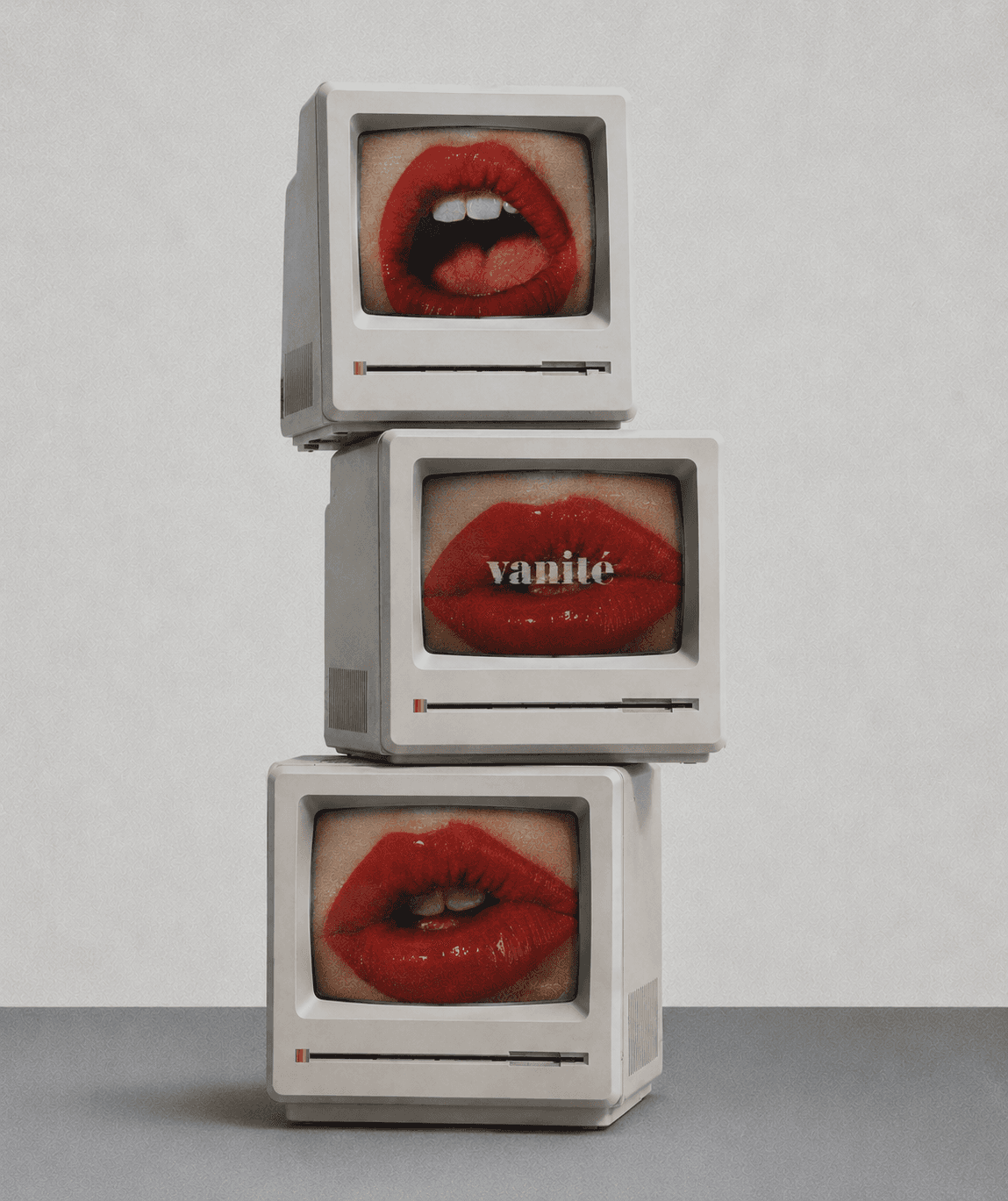
Vanité was created as a response to the overly polished and performative beauty standards dominating modern beauty culture. I wanted to create a brand that still felt feminine, aspirational, and editorial, but in a way that felt more emotionally honest and lived-in. The concept was rooted in the idea that beauty is rarely pristine — makeup becomes smudged, palettes become worn, lipstick fades, and products begin to carry evidence of experience, routine, spontaneity, and self-expression. Rather than treating imperfection as something to conceal, the brand reframes it as part of the beauty itself. Please read more below.
2026
Branding, Visual Identity, Personal Project


Project Notes
Problem
Modern beauty culture often presents an overly polished version of beauty, where perfection is carefully constructed and imperfection is something to conceal. I wanted to challenge that idea by creating a brand that still felt feminine, aspirational, and editorial, but more emotionally honest.
The challenge was to find a balance between luxury and imperfection: creating a refined beauty identity that could celebrate the messiness, spontaneity, and individuality of how makeup is actually experienced.
Process
I built the visual direction around the intimacy and imperfection of real beauty rituals. Drawing from early 2000s beauty editorials, flash photography, nightlife imagery, and close-up compositions, I created a world that feels nostalgic, impulsive, and slightly undone.
Crushed pigments, glossy but smudged textures, blurred imagery, and worn beauty products became recurring visual elements, introducing tactility and evidence of use. I contrasted these raw, lived-in details with elevated typography and editorial styling to maintain a sense of fashion and refinement.
The name Vanité reinterprets vanity as something expressive, self-aware, and empowering rather than superficial. The identity combines soft neutrals, flushed pinks, reflective silvers, and rich gloss tones to create a feminine, nostalgic, and slightly provocative visual world.
Result
The resulting identity reframes imperfection as part of the beauty itself. Rather than presenting makeup as a tool for achieving perfection, Vanité positions it as a form of experimentation, individuality, and self-expression.
The final brand balances polished editorial sophistication with tactile, imperfect details, creating a beauty world that feels aspirational without feeling unattainable.
Credits
Imagery: Images sourced from Pinterest and developed through original art direction, editing, and AI-assisted image enhancement.
Source Photography: Magazine image by Marlen Stahlhuth, edited with AI-assisted image enhancement.


